
Series One Growth · Episode 2
The Courage to Choose Again
Published · Host and writer: Uzor
None of us chose where we started. Uzor looks at how family, schooling and faith plant seeds in us, why fear pulls us back from change, and what it takes to choose again, with two guests who made the same big choice a second time.
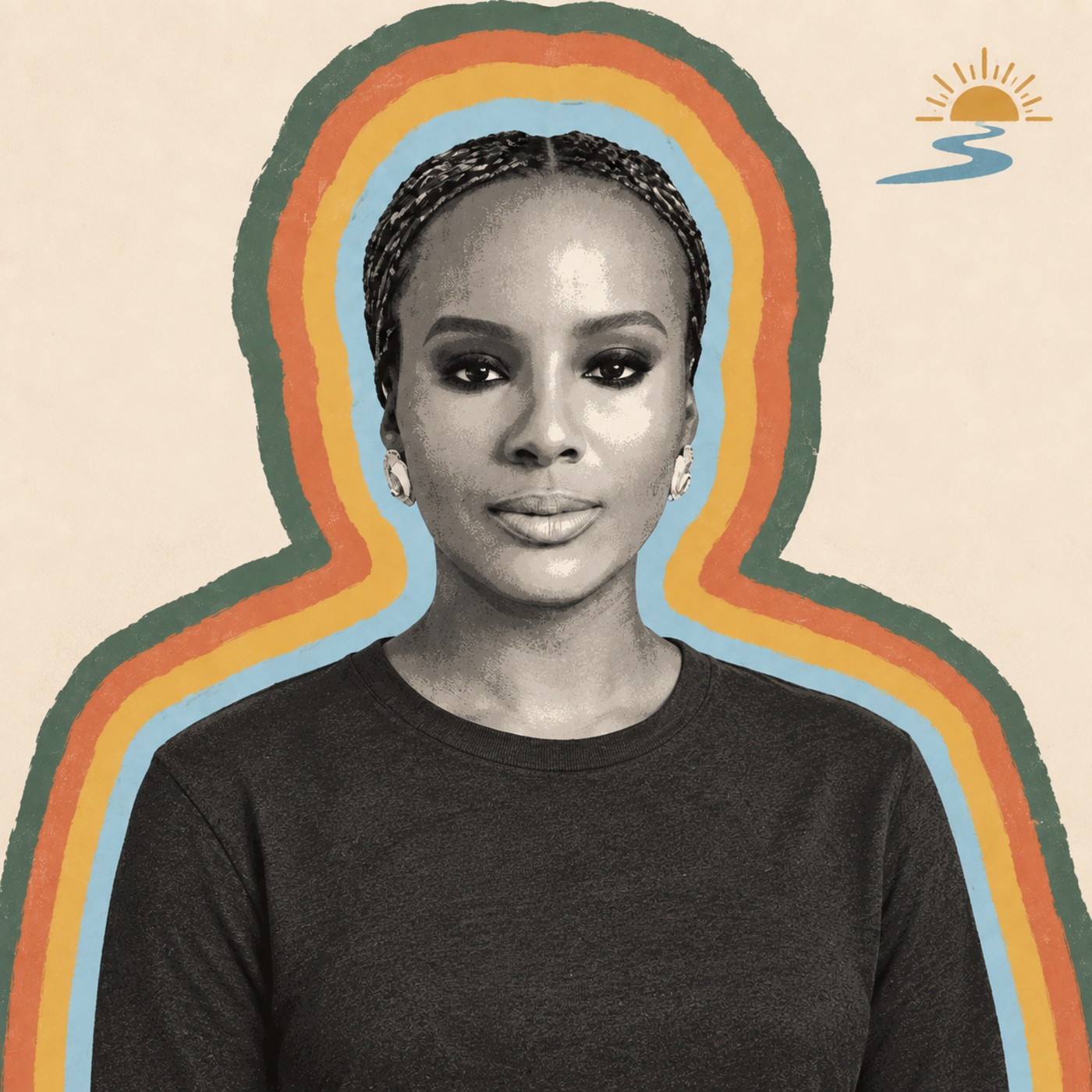
Show notes
In the second episode of the Growth series, Uzor explores the baseline we all start from, the four ways adults keep growing (physical, emotional, spiritual and intellectual) and why the second choice is often harder, and wiser, than the first. One guest chose the same partner twice; another left a successful IT career in the UK to return home to Ghana. The episode ends with four steps to try this week. What are you choosing again this year? Tell us at hello@tsgpodcast.com.
Host and writer: Uzor. Guest contributions used with permission.
Health note
This episode is not medical, legal or financial advice. If you have a health concern, please speak to a qualified professional who knows your situation.
Full transcript
None of us chose where we started.
I did not choose my family. I did not choose the house I grew up in, the school I went to first, or the faith I was introduced to as a child. I did not choose the voices that told me what a good life looks like.
And neither did you.
That starting point gave us a lot. Values. Habits. A way of seeing the world. Some of it has carried us well. Some of it, if we are honest, has been carrying us in a direction we never actually agreed to.
Today is about what happens next. About the moment you realise that the life you were handed is not the only life available to you. And about the courage it takes to choose again.
Welcome to This Side of Grown. I am Uzor.
This is Episode 2 of our Growth series.
Last episode, on The Weight of Small Decisions, we talked about the small choices we repeat every day. The cup of tea. The calendar. The phone call we keep putting off. And I asked you to notice one repeated choice for seven days.
Thank you for all your feedback. It was really interesting to read.
Here is something we do not say often enough. Life does not give us an infinite number of days. Most of us hope to live to a ripe old age. Some of us will not. So the question of whether we are actually growing is not an academic one. It is about how we use the time we have.
This week, we go one level deeper. Before the small daily choices, there is the ground we are standing on. Where we started. And I want to ask a simple question. How do we know whether we have actually grown, if we have never looked honestly at where we began?
Every one of us begins with a baseline.
Our family. The nurture we received, or did not receive. Our early education. The spiritual life we were exposed to, or the absence of one.
That baseline plants seeds in us. For some people, the seed is excellence. Everything must be done properly, and if it is not perfect, it is not finished. For others, it is loyalty. You stand by your people, whatever it costs. For others still, it is peace, or service, or justice, or simply survival.
For me, it was being born into a Catholic family. It planted a seed of deep devotion, to everything and everyone. And an uncanny need to forgive almost anything, so that I could be deserving of forgiveness.
Once we can separate what that environment put in us, and see our own unique seed, we start to have clarity. Until we understand the ingredients that make us, we cannot tell whether we are actually growing, or simply moving.
Here is the thing about family. Because we did not choose it, we often do not notice how much it still shapes us. It is like an accent. Everyone else can hear it. You only notice it when someone points it out.
Think of it as the first operating system you were given. You did not choose to install it, but it decides how you process early life, and how you handle, or resist, change.
So the first act of growth is not change. It is clarity. Looking at what your early environment put in you, and sorting it. This is a strength I want to keep. This is a habit I picked up that no longer serves me. And this is a fear that was never really mine.
Which brings me to fear.
Most of us say we want to grow. And yet, when the chance to change actually arrives, something in us pulls back, even when the change is good, even when we asked for it.
I think that is because human beings are wired to protect themselves. Fear is a preservation instinct. It is there to keep us alive. It tells us to choose what is familiar, because familiar has not killed us yet.
That instinct is useful. It stops us from walking into traffic. But the same instinct can also keep us in a job we have outgrown, a habit we know is hurting us, or a version of ourselves that made sense at twenty-five and no longer makes sense at forty-five.
So fear does two jobs. It preserves us. And, if we let it, it limits us.
The courage to choose again is not the absence of fear. It is noticing the fear, thanking it for trying to keep you safe, and choosing anyway.
I asked a few people to tell me about a choice they had to make a second time. Here is the first.
Guest 1
I chose the same person twice. The first time, it was passion. The second time, it was peace. My husband and I met in our early twenties. Our love was intense, but distance eventually pulled us apart, and we lost touch. Years later, he called while visiting Lagos. We reconnected, and the chemistry was still there. But something was different. We had grown. We felt safe with each other. This time, we took our time. We built a friendship, nurtured trust, and learned to understand each other more deeply. That second chance taught me that lasting love goes beyond passion. It's about finding peace in each other, growing together, and choosing each other, every single day.
Uzor
I really enjoyed listening to this. Choosing a life partner may be one of the most important decisions any of us will ever make.
And having the chance to choose the same person twice is such a blessing.
What stays with me is the move from passion to peace. Same person. Different reasons. That is what choosing again can look like.
When people talk about growth, they often mean one thing. A promotion. A new house. A bigger title. But I think we grow in at least four different ways, and they do not move at the same speed.
The first is physical.
For most of us, our height is settled by our early twenties. After that, the body still changes, but not upwards. The question shifts from how tall we grow to how we look after what we have. How we eat, how we move, how we rest. Daily choices almost entirely shape that part.
The second is emotional.
Emotional growth does not stop at twenty-five. If anything, it is just getting started.
And for many of us, the place where it happens most is work. How you react to a difficult situation at twenty-five is totally different from how you react at thirty-five or forty-five. At work, we learn to hold our tongue in the meeting. To breathe before replying to the email. To disagree without destroying the relationship. Partly because we want to be respected. Partly, if we are honest, because we want the promotion.
The office is not only where we earn a living. In many ways, it is an emotional gym. There are eyes on us. And that pressure teaches us a kind of self-control many of us never learnt at home.
But that discipline does not stay at work. It comes home with us. The patience we learn with a difficult colleague can become the patience we show our children, our partners, our parents.
I remember reading back some of my emails from early in my career, a few years after I had sent them. I could not believe how harsh my tone was. I was appalled.
That is how I came up with my now-famous 24-hour rule. I wait a full day before I reply to an unpleasant message. It is a rule I still try to keep, almost fifteen years on.
The third is spiritual.
I mean this broadly. For some people it is religion. For others it is a set of principles, a philosophy, or simply what they believe in their heart about what matters. And for some of us, if we are being truthful, the thing in control has been ego, or money, or the need to be seen.
Spiritual growth, as I understand it, is when what you believe stops being something you say and becomes something you do. It shapes how you treat people, how you hold on to things, and how you respond when life does not go your way.
The fourth is intellectual.
Formal education ends for most people at some point. Learning does not have to.
I remember, in my mid-twenties, during my second degree, sitting in a classroom filled with people from different parts of the world and different walks of life. At one point, I did not understand what the professor was discussing at all. Yet a group of my classmates understood it completely, and they were giving apt examples.
It was the first time I realised the limit my education had given me. My analytical mind had a ceiling, and I was confused.
But that one moment drove my quest for knowledge. I resolved to read everything that came my way. I knew the brain is a muscle that can grow and improve with knowledge, so I took that path. That was how I learnt to turn a weakness from my background into a driving force.
Years later, sitting in rooms with people from around the world, I could clearly see the difference in how I think through information.
What looked like a permanent limit was really a starting point.
Here is another voice. Someone who had to choose again.
Guest 2
Over a decade ago, I was living in the UK, at the peak of my career in IT. Yet, despite my professional success, I felt an unexplained sense of emptiness.
After more than twenty years away, I decided to return home to Ghana.
So much had changed. I had to unlearn, relearn, and rediscover my place. With the support of family, friends, and colleagues, I gradually found my footing and built a new path.
Looking back, I realise what was missing was a sense of belonging, being surrounded by my people, and the opportunity to contribute meaningfully to Ghana's technological advancement.
Returning home was a defining decision, and one I have never regretted.
Uzor
For many of us in Africa and the diaspora, migration has sat at the heart of family conversations for decades. We cannot underestimate its impact on family structure and on the direction of our lives.
The decision stares many of us in the face every day. We are either trying to relocate abroad, or trying to return home. That pull in two directions, and the indecision it brings, follows a lot of us.
I am glad our guest chose to come home, and has never regretted it.
So, if we cannot choose where we started, what can we choose?
Quite a lot, it turns out.
We cannot choose our family. But we do choose our friends. And the people we choose to spend time with shape us more than we admit. They shape what we think is normal, what we think is possible, and what we think we deserve.
Because we did not choose our family, its effects are not always obvious to us. And because friendship feels natural, we often take it for granted. So it is worth asking: are the people around me planting the right seeds for my future?
Take a moment now. Think of one area, emotional or spiritual, where you can honestly say, "Yes, I have grown." Then think of one person who has been part of that growth.
Most of us are not conscious of it day to day. But the people we spend time with, and the things we expose our minds to, can change the direction of a whole life.
We cannot choose our first school. But we can choose what we read, what we listen to, and what we let into our minds every day.
We cannot undo our first fears. But we can decide whether they still get to make our decisions.
Growth is rarely one dramatic leap. It is the small, repeated choices about where we go, what we read, who we spend time with, and when we start or stop. Those choices plant seeds. And seeds take time.
This is what I mean by starting over. Not throwing away everything that came before. Choosing again, with what you know now.
Let me make that practical, because choosing again looks different in different parts of life.
At work, choosing again might mean going back to a career you left. Or leaving one you were told was safe. It might mean returning to study at forty, sitting in a classroom with people half your age, and asking the question everyone else is too proud to ask. It might mean saying, for the first time, "I am not the best person for this role, but I know who is."
In relationships, choosing again might mean giving a friendship a second chance. Or deciding, calmly, that a friendship has run its course. It might mean going back to a family member you have avoided for years, not because they have changed, but because you have. It can also mean choosing your own peace over a role you were given as a child. The peacemaker. The responsible one. The one who always says yes.
In health, choosing again might mean going back to the gym after a long break, without the speech about how this time will be different. Just going. It might mean booking the test you cancelled twice. Or finally taking rest seriously.
For me, it was choosing a life of peace and joy that comes from within, and not letting anything outside me decide it.
None of these choices are small when you are the one making them. And none of them are guaranteed to work. That is exactly why they take courage.
Here is something I have noticed. The second choice is often harder than the first. The first time, we choose with hope and very little information. The second time, we know the cost. We know what can go wrong. We remember the last attempt.
But the second time, we also choose with clarity. We know more about who we are. We know which fears are real and which ones were borrowed from someone else. And we know that we survived the first attempt, even if it did not go to plan.
That is the quiet advantage of this side of grown. Experience makes choosing again harder. It also makes it wiser.
Here is something to try this week. Four short steps.
Step one. Look at your starting point. Write down two things your early environment gave you that you want to keep. And one thing it gave you that you are ready to question.
Step two. Name the fear. Think of one change you have been avoiding. Ask yourself honestly: is this fear protecting me, or limiting me?
Step three. Feed your mind on purpose. Choose one thing to read, listen to or learn this week that sits slightly outside your comfort zone.
Step four. Look at who is around you. Not to judge anyone. Just notice which conversations leave you growing, and which leave you shrinking.
You do not have to change anything yet. Choosing again starts with seeing clearly.
We are human, and we have the benefit, right through life, of being able to change. Our environment and the people in our lives shape what we reach for, and how well we can follow through.
None of us chose where we started. But every day, we choose again. What we keep. What we question. What we let go of.
I would love to hear what you are choosing again this year. Send me a note at hello at T S G podcast dot com. That is hello at tsgpodcast.com. Or leave a comment under this episode on Instagram, YouTube or LinkedIn. With your permission, I may share some of your stories in a future episode, and I will always ask first.
Next week, we go back to the beginning of adult life, to our twenties and thirties. What we knew then, what we got right by accident, and what we got wrong with confidence.
And here is the question we keep returning to in this series. What do you know now that you could not have known then?
On this side of grown, we cannot choose where we started, but we can always choose again.